Skip to content

Menu

  • Home
  • Trends
  • Entertainment
  • Travel
  • More
    • Food
    • Celebrity Lifestyle
    • Real Estate

Menu

  • Home
  • Trends
  • Entertainment
  • Travel
  • More
    • Food
    • Celebrity Lifestyle
    • Real Estate

Copyright LuminousLiving 2026 | Theme by ThemeinProgress | Proudly powered by WordPress

LuminousLiving
  • Home
  • Trends
  • Entertainment
  • Travel
  • More
    • Food
    • Celebrity Lifestyle
    • Real Estate
  • You are here :
  • Home
  • Entertainment
  • Market Value Analysis: Comparing Your Coin to Analogues

Entertainment

Market Value Analysis: Comparing Your Coin to Analogues

FabulousChick – December 22, 2025
Entertainment

Geolocation and Brain Traps: 6 Myths That Are Sabotaging Your Smartphone Habits

FabulousChick – July 14, 2025
Trends

1921 Silver Dollar Value: The Coin That Bridged Two American Eras

FabulousChick – May 6, 2025
Real Estate

Vintage, Cosy, Unique: Style Your Home with These Decor Details

FabulousChick – April 14, 2025
Entertainment

Cultural Chic: Blending Global Art and Traditions into Modern Interiors

FabulousChick – April 8, 2025
Entertainment

From Concept to Creation: How Interior Designers Transform Dreams into Reality

FabulousChick – April 7, 2025
Entertainment

Luxury on the Move: Exploring the World of High-End Mobile Living

FabulousChick – April 4, 2025
Entertainment

Curated Spaces: Personalizing Your Home with Unique Collectibles

FabulousChick – April 3, 2025
Entertainment

Vintage Vibes: Infusing Retro Charm into Contemporary Home Design

FabulousChick – April 2, 2025
Entertainment

Architectural Wonders: Modern Homes Redefining Urban Living

FabulousChick – April 1, 2025

woman, comparing two Washington coins
Written by FabulousChick on December 22, 2025

Market Value Analysis: Comparing Your Coin to Analogues

Entertainment Article

Finding the correct market price for a coin requires detailed study, showing how the object fits into the current collecting world.

The price of the coins worth money depends on the coin’s history and its standing in today’s buying and selling environment.

Comparing your coin with similar pieces that have sold or are currently offered is the only method for setting a fair market value, needing attention to small features and understanding the specific rules of numismatics.

woman, comparing two Washington coins

Main Rules for Comparison

Before starting the comparison, you must place your coin correctly into all its main categories. Getting even one category wrong makes the comparison unhelpful, leading to an incorrect price estimate.

  • Year the coin was made
  • Face value of the coin
  • Metal and a mix of metals are used
  • Mint where the coin was produced

These pieces of information form the base, needing checking against official coin books.

Differences in just the mint mark, even with the same year, can change the price many times over, resulting from lower production numbers.

Rarity and Production Numbers

Determining the rarity of a coin begins with checking the production number, which represents the total number of pieces produced.

When fewer coins were made, the possible price goes up, often making coins with fewer than 100,000 pieces appealing for buying.

  • Known number of pieces still existing. This is the number of coins that experts and grading companies believe are around right now, proving more meaningful than the first production number, since many coins were lost or melted down over time.

Coins having production faults or small, book-listed differences (for example, a misplaced date or wrong die) often have their own small production number, immediately making their price higher.

Grade

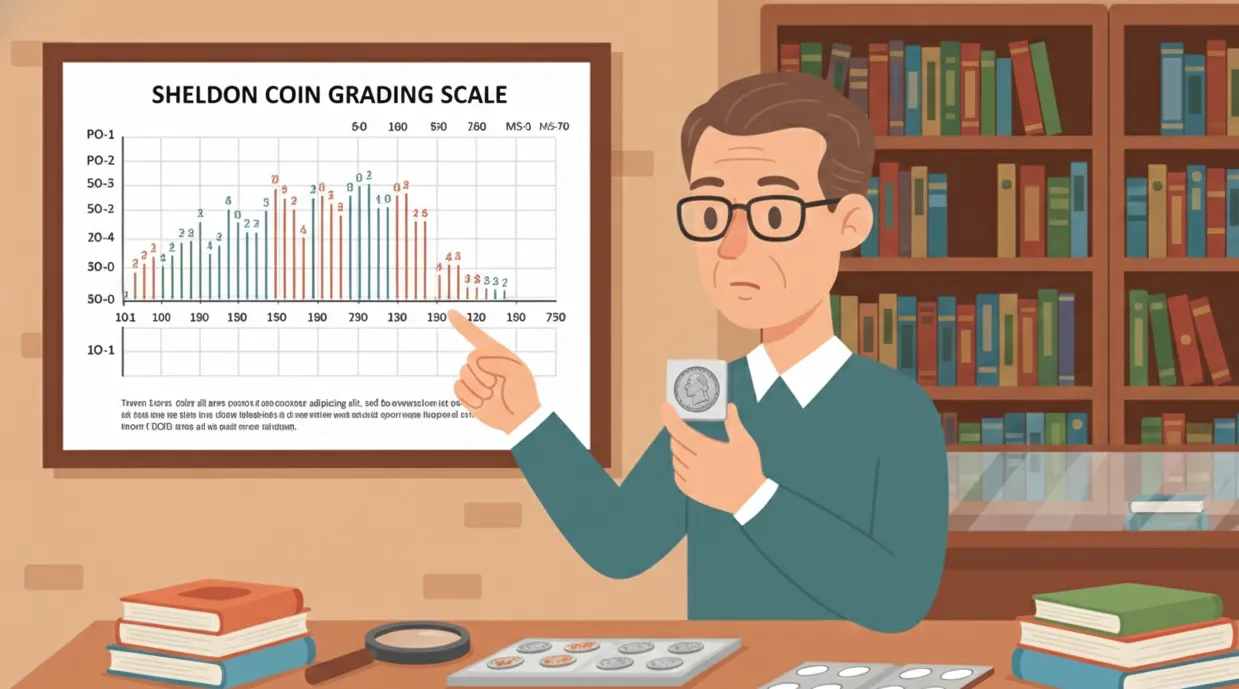
The condition, or grade, is the most clear factor deciding the market price and can be determined with a coin scanner.

Two coins from the same year and type might have a price difference of hundreds of times, just showing a difference in their assigned grade.

  • A coin put into a closed plastic holder and given a price by a professional grading service (PCGS, NGC) gets an official number grade.

This takes away personal feelings from the price, making the comparison completely correct, helping everyone understand the coin’s real state.

  • The grading system uses a scale from 1 to 70. A coin having an MS-65 grade (Uncirculated, Brilliant Uncirculated) costs much more than a coin having an AU-58 grade (About Uncirculated).

The small step between MS-65 and MS-66 often means thousands of dollars, showing how important small details are.

  • Surface state and strike quality. Beyond the number grade, you need to think about other details, such as the quality of the strike, how well the shine remains, and the colour change present.

These specific details must be listed in the description of the coin you are comparing with.

Finding and Looking at Market Analogues

The process of comparison should only use numbers from sales that have actually happened. The price a dealer asks for or a seller posts on an online site is not the real market price.

Using Auction Records

These records are the most trusted source of information for comparison.

  • Auctions show how much a buyer is truly ready to pay, needing you to check the prices of past sales, including the buyer’s fee if you can find it.
  • Auction lots always include a full description, pictures, and the grade, often confirmed by a grading company, letting you match your coin with the sold piece exactly.
  • A price recorded five years ago does not help today, as the market keeps changing, so using sales data from the last six to twelve months will help ensure the most correct comparison.

Comparing with Dealer Price Lists and Catalogues

Price lists and catalogues show the asking price, meaning the highest price a dealer hopes to sell the coin for, always sitting higher than the actual selling value, showing the dealer’s profit.

These books are useful for finding the general price level and change, but you should not use them as the only source for value, remembering your coin will likely sell for 10 to 30% less than the catalogue price.

Looking at Online Places — eBay

On these sites, you must use the filter for “Sold Items” or “Completed Auctions,” allowing you to see only the prices that buyers actually paid.

Listings that found no buyer do not show the market price, needing you to look at real transactions.

Be careful with coins that have not gone through professional grading, seeing that the seller’s grading is often too high or wrong.

When making a comparison, always choose officially graded coins for the best match.

Method for Exact Matching

Just finding a sold coin with the same year and face value is not enough. Matching must look at many factors at once.

Rule of Same Grade

Start looking for similar coins that have a grade closest to your coin’s grade inside a free coin value app.

  • A coin graded MS-64 must be compared only to other MS-64 coins, keeping the comparison true.
  • A coin having a surface colour change must be compared to other coins showing a similar colour change.

For coins without official grades, you must find many similar pieces with the same look and take an average of their prices, giving a general idea of the value.

Thinking about Style Differences and Mistakes

If your coin is a variety (for example, a different type of letter style or a different edge design), you must make sure you compare it with the same variety.

A regular coin and its rare variety have different buying and selling groups and different price levels.

The price of the rare variety may not show up in general coin books, needing extra search.

man, looking at the Sheldon Grade

Looking at Where and When the Sale Happened

Prices can be different based on the sale location, meaning a coin liked in the US might cost more at an American auction than at a European one.

Think about the market where you plan to sell your coin, as this changes the price you will get.

The market can change quickly. Strong interest in a certain coin series or anniversary can raise prices for a short time.

Look at the price chart for a similar coin over the last few years, helping you see if the current price is a sudden jump or a steady way of pricing.

Warnings and General Rules

Using the rules for exact comparison helps you stop making mistakes when buying or selling coins.

  • Don’t compare prices. Compare conditions.

The condition of the coin decides the price, meaning the price simply shows the condition. Always start your study by checking the condition, making sure everything matches.

  • Don’t trust average prices in coin books.

Prices in catalogues often show an average value for a coin in some perfect or nice state, and do not take into account the small differences of a specific piece.

  • Check the seller and auction house.

Only trust auction houses and dealers having a long history of business and a good name, seeing that prices for lots from unknown sellers might be lower because people do not trust the quality.

  • Think about how often the coin sells.

Coins appearing often at auctions have a price that is easier to guess. Unique or extremely rare coins can have a price that changes a lot, showing that each time they appear for sale is a special event.

  • Never use the “Buy It Now” price on online sites as a market sign.

That price only shows what the seller wants, not the actual market price of the coin, requiring you to find real sale data.

Exactly comparing your coin with others is a process with many steps, needing study of actual sales, a confirmed grade, and thinking about all the small details, including varieties and surface state. Only this full way of looking at the coin guarantees getting a fair price.

  • woman, comparing two Washington coins
    Market Value Analysis: Comparing Your Coin to Analogues
    Finding the correct market price for a coin requires detailed study, showing how the object
  • A young man sits in a café with a worried expression, checking his phone and unknowingly reinforcing the myth that closing apps stops all tracking.
    Geolocation and Brain Traps: 6 Myths That Are Sabotaging Your Smartphone Habits
    We live in a world where sharing your location has become second nature. You open
  • Close-up of a 1921 Morgan Dollar and 1921 Peace Dollar showing the reverse designs, with detailed textures of the eagle engravings and coin patina.
    1921 Silver Dollar Value: The Coin That Bridged Two American Eras
    What if a single silver coin could whisper stories from two worlds—an era of Wild
  • A vintage interior with items from the XXth century, flowers, and soft cushions.
    Vintage, Cosy, Unique: Style Your Home with These Decor Details
    You are totally in love with the vintage and boho interior styles but totally don’t
  • Incorporating Global Artistic Elements into Your Space
    Cultural Chic: Blending Global Art and Traditions into Modern Interiors
    Understanding the Essence of Cultural Chic in Interior Design What Makes Cultural Chic Truly Spellbinding?

Copyright LuminousLiving 2026